Best Foot Peel Masks (2026)
— For Calluses and Baby-Soft Skin
Foot peel masks deliver one of the most dramatic and satisfying at-home beauty results available — within 3–7 days of a single 60-minute treatment, accumulated dead skin cells peel away in large sheets, revealing significantly softer, newer skin underneath. The mechanism is chemical exfoliation: AHAs (glycolic and lactic acid) and sometimes BHAs (salicylic acid) break down the protein bonds holding dead skin cells together, allowing the entire outer layer to separate naturally. For people with callused heels, rough soles, or years of accumulated thickened skin, a foot peel mask can deliver what months of mechanical scrubbing cannot. We ranked four of the best — from an $8 drugstore pick to a $28 premium formula — by peeling effectiveness, ingredient quality, and final skin softness.
🦶 Quick Picks
Baby Foot Exfoliant Peel
Best Overall · $25 · 17 natural extracts, 62K reviews, category original
Boscia Sake Foot Peel
Best Premium · $28 · Sake + AHA formula, 4.3 stars, no parabens
Dermora Foot Peel Mask
Best Value · $12 · 4.5 stars, 28K reviews, 2-pack available
Dr. Scholl's Peeling Mask
Best Budget · $8 · Drugstore availability, 15K reviews, trusted brand
Baby Foot Exfoliant Foot Peel
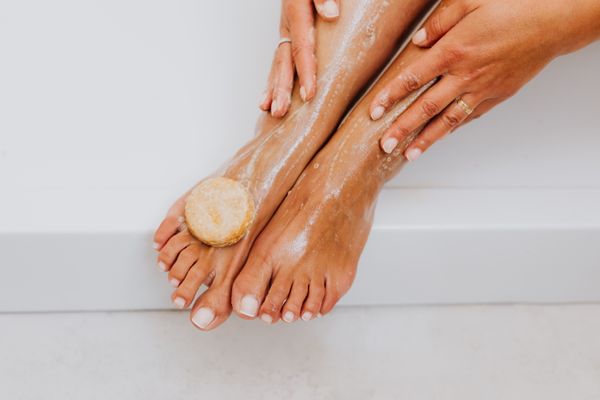
Baby Foot is the original foot peel mask — the Japanese brand that created the category and introduced the viral "sock peel" concept to the western market. With 62,000 reviews it's the most validated foot peel brand available, and the 17 natural fruit acid extracts (alongside the core AHA/lactic acid formula) provide both effective exfoliation and skin-nourishing benefits during the 60-90 minute treatment soak. The peeling typically begins day 3–5 and peaks around day 7–10, with most users experiencing the satisfying large-sheet peeling that made the product a social media phenomenon. Baby Foot is the most widely tested formula with the deepest consumer knowledge base around it — the 62,000 reviews provide an extensive documentation of how to use it effectively (soaking feet in warm water first dramatically accelerates the peel), what to expect, and which skin types respond best. At 4.2 stars the rating reflects genuine user experience — the peeling process is dramatic and requires a week of staying home or wearing closed-toe shoes, but the final result is consistently praised as remarkable.
Pros
- Original foot peel — most tested formula
- 62K reviews — deepest consumer knowledge base
- 17 natural extracts — nourishing during treatment
- Dramatic, satisfying peeling results
Cons
- Peeling lasts 7–14 days — plan around events
- $25 — more expensive than Dermora for same result
Boscia Sake Foot Peel Mask
Boscia's Sake Foot Peel takes a more curated skincare approach to the foot peel category — sake (fermented rice) is rich in kojic acid and amino acids that provide both exfoliation and brightening benefits alongside the AHA-based chemical exfoliation. Boscia is a clean beauty brand (no parabens, sulfates, or artificial fragrances), making this the choice for users who prioritize clean formulation standards in their skincare products. At $28 it's the most expensive option on this list, and the premium reflects both brand quality and a more sophisticated formula. The 4.3-star rating is the highest among the premium-priced options. The peeling timeline and mechanism are similar to Baby Foot — soak 60 minutes, peel begins day 3–7. For users who are Boscia loyal or who specifically want a clean-beauty formulation in their foot peel, it's the justified premium choice. For pure callus removal and maximum peeling effectiveness, the Baby Foot or Dermora formulas have more extensive consumer validation.
Pros
- Clean beauty formula — no parabens or fragrance
- Sake adds kojic acid for brightening benefit
- Boscia brand quality and transparency
- 4.3 stars — well rated
Cons
- $28 — most expensive on this list
- Less consumer validation than Baby Foot
Dermora Foot Peel Mask
The Dermora foot peel mask is the best value option in the category and — notably — the highest rated foot peel mask on this list at 4.5 stars across 28,000 reviews. At $12 it's less than half the price of Baby Foot and Boscia while delivering effectively equivalent AHA-based chemical exfoliation and peeling results. The formula includes lactic acid, glycolic acid, and salicylic acid — a more comprehensive acid blend than some competitors — plus botanical extracts for soothing during treatment. The 2-pack option makes it particularly economical for regular use or households with two users. The reason it ranks third despite the highest rating is that Baby Foot's 62,000 reviews represent a vastly deeper consumer knowledge base — Dermora's 28,000 reviews, while impressive for the category, provide a less comprehensive guide to individual variation and edge cases. For new foot peel users who want to test the category at the lowest reasonable price, Dermora at $12 is the smartest entry point.
Pros
- 4.5 stars — highest rating on this list
- $12 — exceptional value
- Triple-acid formula (lactic + glycolic + salicylic)
- 2-pack option for ongoing use
Cons
- Fewer reviews than Baby Foot — less consumer knowledge
- Newer brand — less established than Baby Foot
Dr. Scholl's Exfoliating Foot Peeling Mask
Dr. Scholl's brings the foot peel mask to the drugstore price point — at $8, it's the most accessible option on this list, available at most pharmacies and mass retailers in addition to Amazon. For users who prefer the Dr. Scholl's brand trust (a household name in foot care for over 100 years), want to try a foot peel mask at minimum financial commitment, or simply want drugstore convenience, it delivers the core chemical exfoliation mechanism at the lowest price. At 15,000 reviews and 4.3 stars it's well-validated for the price, and the peeling results are comparable to more expensive options for users with moderate callusing. Users with very heavy callus buildup tend to report better results from the Baby Foot or Dermora formulas with their more concentrated acid blends. At $8 it's the easiest recommendation as a "try it first" option before committing to the higher-priced alternatives.
Pros
- $8 — lowest price here
- Drugstore availability — no wait for shipping
- Dr. Scholl's brand — trusted foot care name
- 4.3 stars — respectable rating for the price
Cons
- Less effective for very heavy callus buildup
- Smaller acid concentration vs. Dermora and Baby Foot
Frequently Asked Questions
How do foot peel masks work?
Foot peel masks use AHAs (glycolic, lactic acid) and sometimes BHAs (salicylic acid) to break down desmosomes — the protein bonds holding dead skin cells together. After a 60–90 minute soak, these acids penetrate the outer stratum corneum over 3–7 days, causing the accumulated dead skin layers to separate and peel away as a sheet. Results last 4–8 weeks. Soaking feet in warm water before treatment dramatically accelerates peeling onset.
Is foot peeling normal and when should you be concerned?
Dramatic sheet peeling is completely normal and expected — it's the entire mechanism. However, stop use if you experience: redness or burning during the soak (remove immediately), peeling that reveals raw-looking skin instead of intact newer skin, or any broken or infected areas. Do not use on open wounds, cracked heels that break skin, diabetic foot conditions, or eczema/psoriasis.
How often can you use a foot peel mask?
No more than once every 4–8 weeks — this matches the skin cell turnover cycle. Using more frequently risks over-exfoliation, thinning the stratum corneum and increasing sensitivity. Between treatments, daily use of a urea-based foot cream (10–25% urea) significantly extends softness by preventing rapid dead skin buildup.