Best Red Light Therapy
Face Masks (2026)
LED face masks have evolved from celebrity-photo curiosity into a genuinely well-researched skincare tool — with peer-reviewed clinical studies backing their ability to stimulate collagen production, reduce inflammation, and improve skin texture with consistent use. The technology (low-level light therapy, or LLLT) was originally developed for wound healing and is now applied to anti-aging skincare through consumer masks that emit red and near-infrared wavelengths. The difference between masks is not just price: it's wavelength precision, energy density (irradiance), and how well the mask contours to the face to deliver light evenly. We reviewed four of the most talked-about options — from the clinical-grade Omnilux to the accessible Aduro budget pick — to help you choose based on your goals and budget.
✨ Quick Picks
CurrentBody Skin LED Mask
Best Overall · $380 · 633nm + 830nm, flexible fit, 8K reviews
Dr. Dennis Gross DRx SpectraLite Pro
Best Anti-Aging · $455 · Red + blue + amber, 5-mode dermatologist design
Omnilux Contour Face
Best Medical-Grade · $395 · FDA-cleared, flexible silicone, 3.4K reviews
Aduro 7+1 LED Face Mask
Best Budget · $60 · 7 color modes, 28K reviews
CurrentBody Skin LED Light Therapy Mask
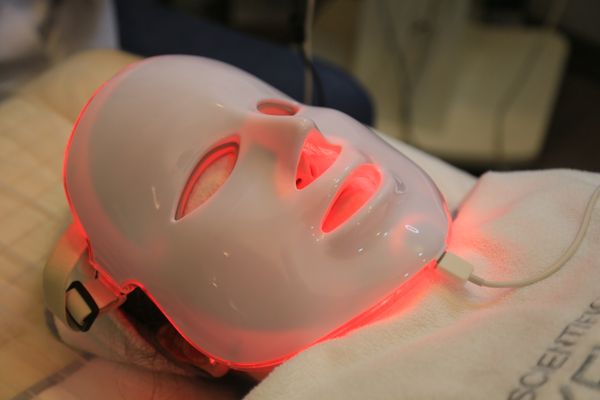
The CurrentBody Skin LED mask strikes the best balance of clinical effectiveness and ease of use. Its two clinically-proven wavelengths — 633nm red light and 830nm near-infrared — target both surface-level collagen stimulation and deeper tissue repair. The patented flexible silicone design conforms snugly to the face, bringing the LEDs within millimeters of the skin (critical for effective photon delivery — distance significantly reduces intensity). In a 10-week clinical study, 88% of participants reported improved skin firmness, and 86% saw reduced fine lines. The 10-minute treatment sessions are auto-timed, and the wireless design means you can walk around during use. With 8,100 Amazon reviews at 4.7 stars, the CurrentBody stands as the most validated consumer LED mask for anti-aging — and at $380, it hits a sweet spot between the budget Aduro and the $455 Dr. Dennis Gross.
Pros
- Clinically proven dual wavelengths
- Flexible mask — hugs face contours
- Wireless, auto-timed 10-min sessions
- Strong clinical trial results published
Cons
- No blue light (no acne-targeting mode)
- Premium price point
Dr. Dennis Gross DRx SpectraLite FaceWare Pro
Designed by board-certified dermatologist Dr. Dennis Gross, the SpectraLite FaceWare Pro is the only mask on this list that targets all three major skin concerns simultaneously. Red light stimulates collagen; blue light kills acne-causing bacteria; amber light reduces inflammation and redness. Five treatment modes let you customize the combination — anti-aging only, anti-acne only, or a combined protocol. The 3-minute session time is the shortest on this list and the rigid mask design is simpler to put on than a flexible silicone version. The trade-off is that rigid masks fit fewer face shapes as snugly, potentially reducing LED-to-skin proximity for some users. At $455 it's the most expensive here, but for anyone dealing with both aging concerns and hormonal acne simultaneously, the multi-wavelength versatility is unmatched.
Pros
- 3 wavelengths: anti-aging + anti-acne + anti-redness
- Shortest session time (3 minutes)
- Dermatologist-designed with clinical credibility
- 5 treatment mode combinations
Cons
- Most expensive on this list
- Rigid design may not fit all face shapes
Omnilux Contour Face
Omnilux occupies a unique position — it's the only mask on this list cleared by the FDA as a Class II medical device for anti-aging, meaning it meets the same regulatory standard used to evaluate professional clinical devices. The Contour Face uses 633nm red and 830nm near-infrared wavelengths (identical to the CurrentBody) but delivers them through a more precisely engineered array of 132 LEDs in a flexible medical-grade silicone shell. The 10-minute sessions are backed by Omnilux's own clinical trials showing significant improvement in fine lines after just four weeks. At $395, it sits between the CurrentBody and the Dennis Gross in price — and in some respects outperforms both by virtue of its FDA clearance. Highest-rated of all four at 4.8 stars. Recommended protocol is 3–5 times per week.
Pros
- FDA-cleared — highest regulatory standard here
- Flexible medical-grade silicone shell
- Highest user rating (4.8 stars)
- Own clinical trial data published
Cons
- No blue light mode for acne concerns
- Fewer Amazon reviews than CurrentBody
Aduro 7+1 LED Face Mask
The Aduro is the entry point for anyone curious about LED face mask therapy who isn't ready to spend $380+. It offers 7 color modes plus 1 infrared mode — red, blue, green, yellow, cyan, purple, white, and near-infrared — covering more wavelength combinations than any other mask on this list. The tradeoff is energy density: at this price, the irradiance (power per area) of the LEDs is lower than clinical devices, meaning results require more patience and consistency to achieve. The rigid plastic shell is also less conforming than flexible silicone designs. That said, 28,600+ reviews at 4.2 stars tell you the Aduro delivers noticeable results for many users, particularly those treating acne with the blue light mode. It's a genuine try-before-you-invest option before committing to a $380–$455 device.
Pros
- 8 wavelength modes — most versatile
- Very affordable entry into LED therapy
- Most reviews — extensive user feedback
Cons
- Lower irradiance than clinical-grade masks
- Rigid shell — less skin contact
- No clinical trial data backing
Frequently Asked Questions
What's the difference between red and near-infrared light?
Red light (620–700nm) targets the surface layers of skin — stimulating collagen production, reducing inflammation, and improving skin tone. Near-infrared light (800–900nm) penetrates deeper, reaching muscle tissue and promoting cellular energy (ATP) production. The most effective masks combine both: red light handles visible aging concerns while NIR supports deeper tissue repair. Masks offering only a single wavelength are less effective than dual or multi-wavelength devices.
How many sessions per week do you need to see results?
Most protocols recommend 3–5 sessions per week for the first 4–8 weeks, then 2–3 per week for maintenance. Consistency matters far more than intensity — 3x per week for 12 weeks outperforms daily use for 2 weeks then stopping. Most users notice improved skin tone and texture after 4–6 weeks, with collagen-related benefits (fine line reduction) more visible at 8–12 weeks.
Are LED face masks safe for all skin tones?
Yes — LED light therapy is safe for all skin types and tones because it doesn't generate UV radiation or heat the skin surface. It carries no increased hyperpigmentation risk for darker skin tones, unlike some laser treatments. People with photosensitivity disorders, those on photosensitizing medications, or people with epilepsy should consult a dermatologist before use. Pregnant women are generally advised to avoid as a precaution.