Best Resistance Bands (2026)
— For Strength, Recovery & Mobility
Resistance bands are the most portable and versatile strength and recovery tools available — from $11 loop sets for glute activation to $35 heavy-duty pull-up bands that can provide over 200 pounds of assistance. Multiple randomized controlled trials confirm that progressive resistance band training builds muscle and strength comparably to free weights and machines, making them a legitimate primary training tool rather than just a warm-up accessory. They're equally valuable for physical therapy and injury rehabilitation — TheraBand's color-coded system is the clinical standard used in physical therapy clinics worldwide. We ranked four sets across different categories: loop bands for lower body, flat therapy bands for PT and upper body, and heavy pull-up bands for compound training.
💪 Quick Picks
Fit Simplify Loop Bands
Best Overall · $11 · 5-band set, 4.7 stars, 220K reviews
TheraBand Professional Set
Best PT Bands · $18 · Clinical standard, 85K reviews, latex flat bands
Undersun Fitness Pull-Up Bands
Best Pull-Up Assist · $35 · 5 bands 2–175 lbs, 14K reviews
Whatafit Heavy-Duty Bands
Best Budget Pull-Up · $30 · 4-band set, 32K reviews, high max resistance
Fit Simplify Resistance Loop Exercise Bands
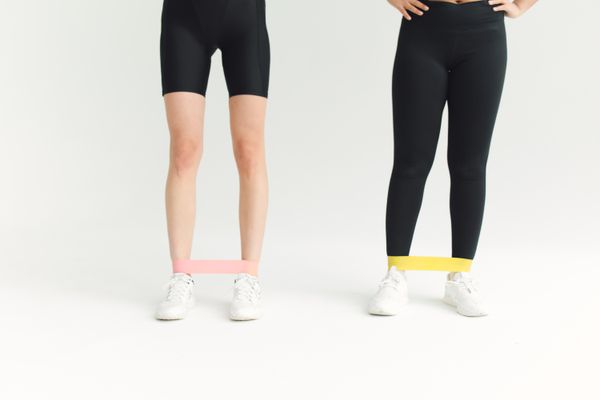
The Fit Simplify loop band set is the most reviewed fitness product in the resistance band category — 220,000 ratings at 4.7 stars is a staggering validation that reflects a product that simply does the job consistently for an enormous number of users. Five bands in graduated resistance levels (extra light to extra heavy) cover the full range from gentle mobility and physical therapy work to demanding glute and lower body training. The 9-inch looped design is the short mini band format ideal for hip thrusts, clamshells, side-steps, leg press variations, and glute bridges. Made from 100% natural latex in five color-coded resistance levels (yellow, green, blue, black, red). The carrying bag included makes them genuinely portable — gym bag, travel, hotel room, or office workout friendly. At $11 for five bands they're the best value resistance training purchase available, period.
Pros
- $11 — extraordinary value for 5 bands
- 220K reviews at 4.7 stars — category standard
- 5 resistance levels — light to heavy
- Includes carrying bag — fully portable
Cons
- Mini loop format — lower body focus only
- Latex — not suitable for latex allergies
TheraBand Professional Resistance Band Set
TheraBand has been the clinical standard for rehabilitation resistance bands for over 40 years — their color-coded progression system (tan through gold) is used in virtually every physical therapy clinic and sports medicine facility worldwide, and the resistance specifications per color are extensively researched and published in peer-reviewed rehabilitation literature. The Professional Set provides flat therapy bands (not loops) that are more versatile for upper body exercises, rotator cuff rehab, ankle strengthening, shoulder impingement protocols, and other PT applications. At $18 for a set and 85,000 reviews at 4.7 stars, they're both clinically authoritative and extremely well-validated by consumer buyers. The flat band format allows users to wrap, anchor, or loop as needed for a much wider exercise variety than mini loops. For anyone recovering from injury or following a PT protocol, TheraBand is the correct clinical choice regardless of price.
Pros
- Clinical PT standard for 40+ years
- Flat format — most versatile for exercise variety
- Color system matches published rehab protocols
- 85K reviews — highly validated
Cons
- Flat format requires more technique than loops
- Not ideal for assisted pull-ups
Undersun Fitness Resistance Pull-Up Bands
The Undersun Fitness pull-up assist band set is the go-to recommendation for anyone working toward their first unassisted pull-up or building bodyweight strength with band-assisted progressions. The set of 5 bands covers a resistance range from 2–175 lbs — giving you a complete assistance ladder from the lightest band (barely there assistance for near-complete pull-ups) to the heaviest (200+ lb person assistance for beginners). The 41-inch loop format works for pull-ups, dips, ring rows, and as a workout band for full-body resistance exercises. Made from 100% natural latex in layered construction for durability. At 14,000 reviews and 4.7 stars it's the highest-rated pull-up band set in its category. Undersun also offers a calisthenics workout program with band purchases for users who want programming to match the equipment. At $35 for five bands with a 175-lb max resistance, the value proposition is excellent.
Pros
- 2–175 lbs range — complete pull-up ladder
- 4.7 stars — highest rated pull-up set
- 5 bands for full-body compound training
- Includes programming support
Cons
- $35 — pricier than Whatafit for similar specs
- Loop format not ideal for PT/rehab use
Whatafit Pull Up Assist Bands Heavy Duty
The Whatafit band set delivers comparable resistance range to the Undersun at $5 less — a 4-band set covering approximately 11–220 lbs of resistance in the same 41-inch loop format for pull-up assistance and full-body training. At 32,000 reviews and 4.6 stars it's more extensively reviewed than the Undersun with only slightly lower per-user satisfaction, and the practical pull-up assist and full-body band performance is functionally identical. The tradeoff for the $5 savings is the smaller band count (4 vs. 5) with slightly fewer resistance step options in between. For most users the four bands provide adequate progression coverage. At $30 it's the best budget option for someone who wants a heavy-duty pull-up assist band set without paying the Undersun premium for the fifth intermediate band and workout program access.
Pros
- $30 — best price for heavy-duty pull-up set
- 32K reviews — more validated than Undersun
- 11–220 lbs — wide resistance range
- 41" loop — works for full-body training
Cons
- 4 bands vs. 5 — fewer resistance steps
- No workout program included
Frequently Asked Questions
Can resistance bands build real muscle, or are they only for rehab?
Resistance bands absolutely build real muscle — multiple randomized controlled trials show band training produces comparable gains in muscle strength and hypertrophy to free weights when progressive overload is applied. The elastic force curve (resistance increases through range of motion) actually provides advantages in specific exercises. Bands are not inferior to weights — they're a different tool with different mechanical properties that produce comparable outcomes for most strength training goals.
What's the difference between loop bands and flat resistance bands?
Loop bands (mini bands, 9–12 inches) are for lower body activation, glute exercises, and mobility. Long flat bands (therapy bands, 4–6 feet) are for upper body, PT, stretching, and pulling motions. Pull-up assist bands (41-inch heavy loops) are for pull-up assistance and heavy compound movements. A complete setup ideally includes all three types for different movement patterns.
How do resistance bands compare to weights for injury recovery?
Bands are frequently the preferred choice for rehabilitation — hence TheraBand's presence in virtually every PT clinic. Key advantages: variable resistance matches tissue tolerance better than fixed loads; elastic force produces lower joint shear forces; bands allow precise eccentric loading critical for tendon repair; and they can replicate specific movement patterns with load control that free weights can't. For active rehabilitation, bands typically produce better clinical outcomes with lower re-injury risk.